
Most Korean skincare myths treat the word Korean as a guarantee. It is not. You do not need ten steps, Korean origin does not make a formula safer or better, natural ingredients can still irritate, a high price does not prove results, "whitening" on a label is not a promise to change your natural skin color, and no single routine suits every sensitive skin. Judge the exact product, its ingredient list and how your own skin responds.
Do you need a ten-step Korean skincare routine?
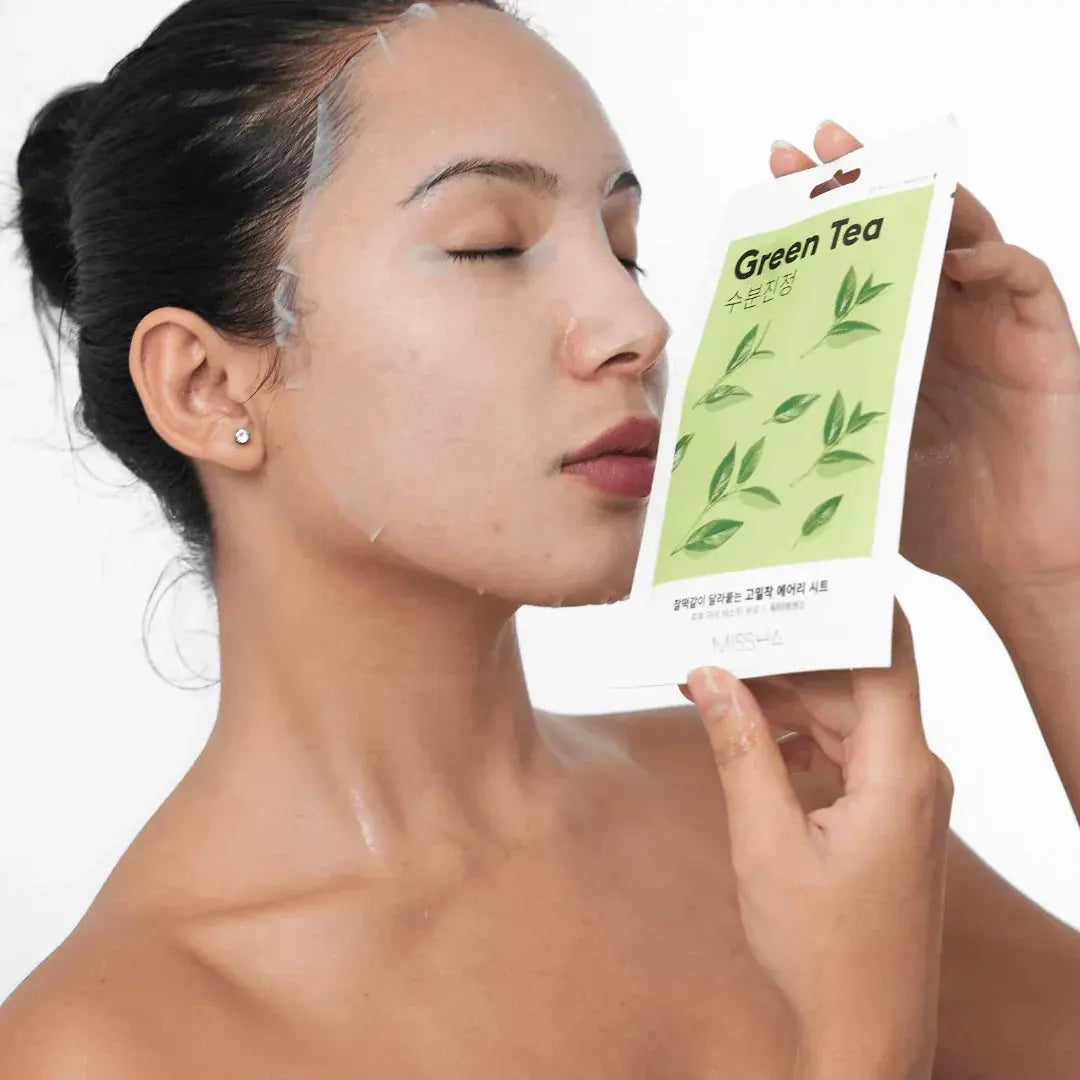
No. There is no required step count, and the famous ten-step routine is one style, not a rule. A gentle cleanser, a moisturizer that suits you and sun protection can already make a useful basic routine. Toners, essences, masks and actives are optional, and each one should have a clear job.
More products at once also make it harder to tell what caused a reaction. In a Nordic winter a simple routine with a comfortable moisturizer can be enough, and you can add daily sun protection as the sun returns in spring and summer. Our guide to ingredients not to mix helps if you do use several actives.
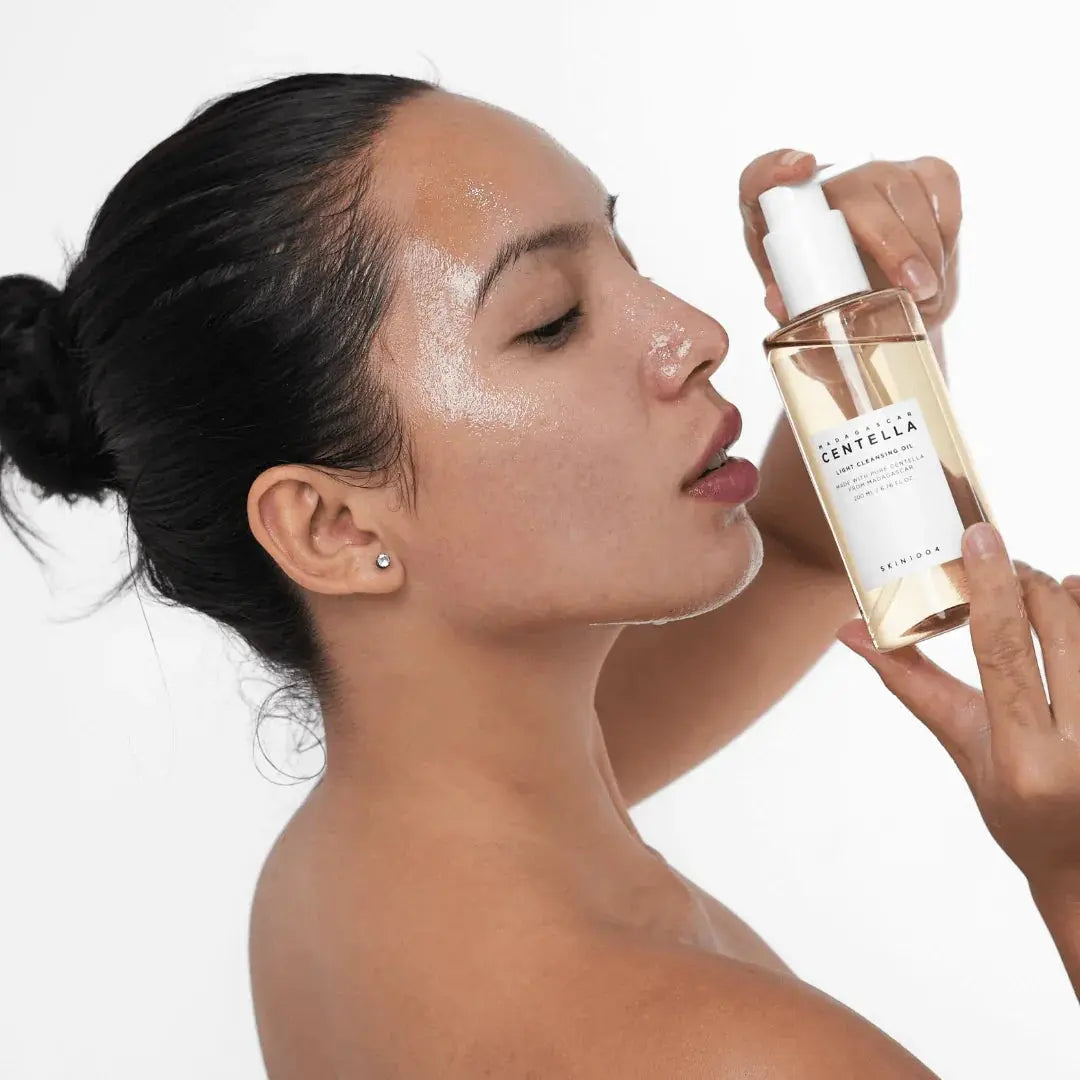
You do not have to use every product in a set, either. The Skin1004 Madagascar Centella Travel Kit has five minis: an ampoule foam, a toning toner, an ampoule, a soothing cream and a light cleansing oil. You can pick the ones that fit your routine. A simple start could be a low pH cleanser such as the ROUNDLAB 1025 Dokdo Cleanser, a water-gel hyaluronic acid serum such as the Torriden DIVE IN Low Molecular Hyaluronic Acid Serum if you want one, a moisturizer and sunscreen.
Is Korean skincare safer or better because it comes from Korea?
No. Country of origin does not tell you whether a formula will suit your skin or work. So the answer to "is Korean skincare safe?" is the same as for any cosmetic: it depends on the exact product, its ingredients and you.
Check the full ingredient list, the product name, the directions and the seller, and hold Korean, European and other products to the same standard. Patch test an unfamiliar product first, as the American Academy of Dermatology advises for new skin care products.
Does natural or traditional mean risk-free?
Not at all. Plant ingredients can irritate or trigger an allergy, and a synthetic ingredient is not automatically harsher. Clean, natural and traditional are marketing words, and none of them replaces product-specific safety information or a cautious start.
Look at the whole formula. The Sulwhasoo Concentrated Ginseng Rejuvenating Water EX is built around ginseng and lists Panax ginseng root water, but its ingredient list also includes denatured alcohol and fragrance. Neither is a reason to avoid it, but both are worth knowing about if your skin reacts to them.
Does a higher price or a viral trend prove a product works?
Not on its own. Price, packaging and popularity are commercial signals, not results. A claim should match the evidence for the finished product, and the European Commission sets common criteria for cosmetic claims. A before-and-after photo, an influencer's result or an ingredient story is not a guarantee.
Our most popular collection is a quick place to browse, but popularity still says nothing about your skin. Ask what job a product would do in your routine before you add it.
Does Korean skincare whiten skin?
Read the word with care. "Whitening" on a label is better understood as "brightening", meaning a cosmetic aimed at the look of dullness or uneven tone, than as a promise to change your natural skin color.
Any such claim should still be supported for the finished product, and results vary with the formula and with your skin. Stop using a product that causes stinging, redness or peeling.
Is there one routine for sensitive skin?
Sensitive skin is not one thing. DermNet describes it as a lay term rather than a single diagnosis. Stinging, burning, redness or scaling can have different causes, so one routine cannot fit every reaction.
Keep the routine simple, test unfamiliar products and add one at a time. Seek professional advice if symptoms are severe, keep returning or do not settle. If you keep reacting, our guide to signs your skincare routine does not suit you covers the signs to watch for, and the skin quiz can suggest where to start.
How can I check any Korean skincare product?
- Confirm the exact product and its directions.
- Name the cosmetic goal, such as hydration or a lighter texture, without turning it into a diagnosis.
- Introduce one new variable at a time.
- Note what happens over a reasonable period, and stop if you get a clear reaction.
Then browse our skincare and skincare kits with that checklist in hand.
FAQ
Is Korean makeup safe?
The same rule applies as for skincare: safety depends on the exact product, its ingredients and your skin, not on the country it comes from. Check the ingredient list, patch test, and stop if you notice irritation, especially around the eyes.
What do dermatologists say about Korean skincare?
We do not speak for dermatologists. The American Academy of Dermatology publishes general advice on skin care basics, on limiting the number of products you use and on testing unfamiliar products, linked in the sources below. That advice applies to Korean and non-Korean products alike.
Do Korean skincare products work for every skin type?
No product works for every skin type. Korean skincare covers many different formulas, so choose by the ingredient list and your own tolerance rather than by origin.
Should I switch my whole routine to Korean products at once?
No. Change one thing at a time, so you can tell what helps and what does not. If a new product causes a clear reaction, stop using it.
Keauty sells some of the products mentioned here.
Sources
- American Academy of Dermatology: skin care basics on a budget
- American Academy of Dermatology: limit the number of products to avoid irritation
- American Academy of Dermatology: test unfamiliar skin care products
- DermNet: sensitive skin
- European Commission: common criteria for cosmetic claims
This is general cosmetic information. Skin differs from person to person, so patch test new products and ask a doctor or pharmacist about any skin condition.